We built Watsynq because the bearing failure was preventable.
Our team has spent years watching plants do route-based vibration rounds and miss the early-stage defects that acoustic emission would have caught. We decided to build the tool we wished existed.
In 2021, Ethan Morales was leading reliability engineering at a heavy manufacturing facility in the Phoenix area. A ball mill pinion gear failure caused a 72-hour unplanned shutdown. The cost: roughly $800,000 in lost production, emergency labour, and expedited parts.
The post-mortem was what drove everything that came next. The acoustic emission data — had anyone been measuring it continuously — would have shown stress wave activity three weeks earlier. The oil particle count had been trending upward for a month. The thermal asymmetry had started shifting two weeks before the failure. The data existed. It just wasn't connected, and nobody was watching all three streams in combination.
Ethan spent the following two years talking to reliability engineers at mining, cement, and chemical processing facilities across the Southwest. The pattern held everywhere: route-based vibration rounds every 2-4 weeks, quarterly oil samples sent off-site, no continuous AE monitoring, and a reactive maintenance backlog that everyone accepted as normal. The sensors and physics to do better existed. The integration to make it practical for a working reliability engineer did not.
He co-founded Watsynq in Phoenix in 2023 with Yuki Tanaka, a signal processing engineer who had spent the previous decade building embedded sensor fusion systems for industrial IoT. The goal was specific: one RUL number the maintenance planner trusts, delivered six weeks before the vibration analyst would have seen it — with a confidence interval and a source trace, not a black box.
Watsynq is not a vibration monitoring service with an oil add-on. It is not a general industrial IoT platform. It does one thing: fuse three sensor physics domains into a single remaining-useful-life number for critical rotating equipment, and deliver that number into the workflow the maintenance team already uses.
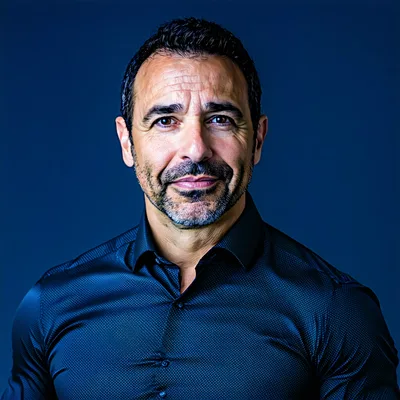
Three people, three years, one product.
Ethan Morales
CEO & Co-Founder
Led reliability engineering at a heavy manufacturing plant for 6 years before founding Watsynq. Specialises in rotating equipment failure physics and maintenance programme design.
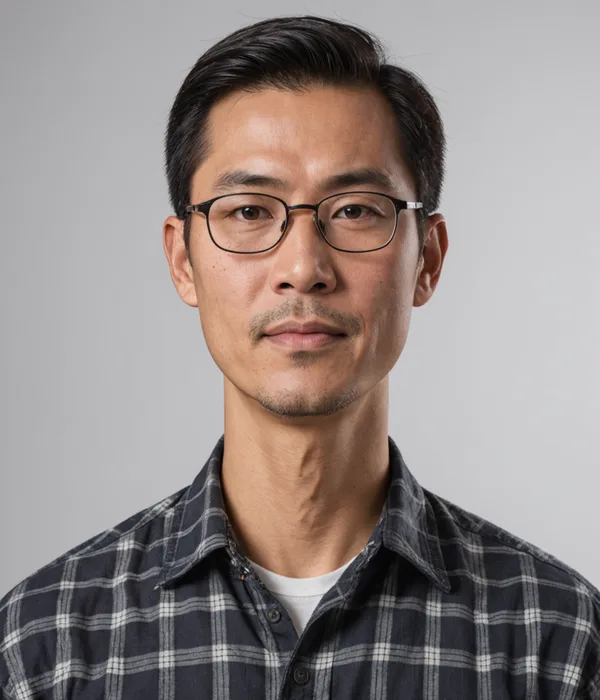
Yuki Tanaka
CTO & Co-Founder
Signal processing engineer, previously built embedded sensor fusion systems for industrial IoT applications. PhD in mechanical systems from Arizona State University. Designed the multi-stream alignment and Bayesian RUL model.
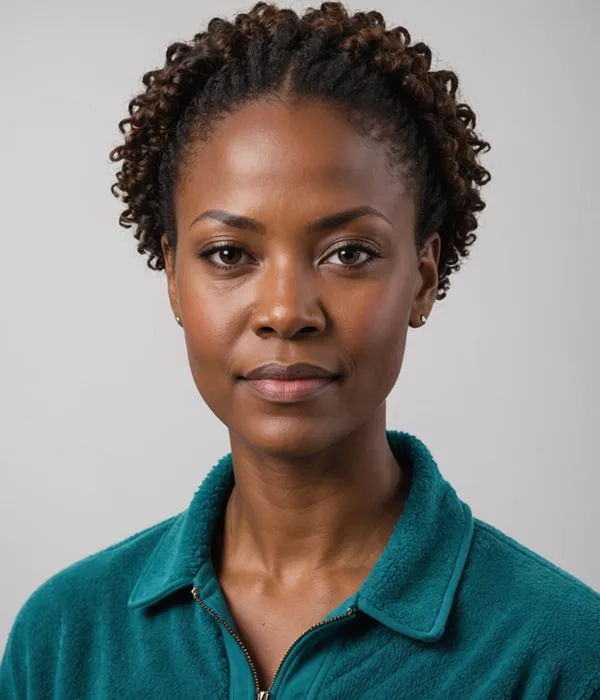
Amara Osei
Head of Customer Success
Former reliability technician at a cement processing plant. Ensures Watsynq deployments translate into measurable maintenance outcomes — from sensor installation to the first planned-over-reactive maintenance event.
Practitioner values, not corporate values.
Evidence over instinct.
Every RUL score has a confidence interval and a source trace. We do not round to integers or drop the uncertainty band to make the number look cleaner. If the model is uncertain, you see it.
Simple enough for shift handover.
If the maintenance planner cannot act on the alert without consulting a data scientist, the alert failed — regardless of how sophisticated the model is. We write alerts for the person scheduling the next outage window, not for the person who built the model.
We work the way you do.
We do not show up with slides. We show up with your equipment data, the RUL scores from the first week of monitoring, and a question: does this match what your maintenance experience tells you about these assets? If it does not, we want to know why.
Phoenix, Arizona.
Watsynq is based in Phoenix, AZ — thirty miles from mining and aggregate operations, two hours from copper processing plants, and inside the same summer heat conditions our customers run equipment in every day.
Address
2 E Congress Street, Suite 600
Phoenix, AZ 85004, US
Phone