Continuous water quality telemetry across your distribution network
Track turbidity, pH, chlorine residual, conductivity, and temperature at the segment level. Catch contamination events before they reach customers — not after.
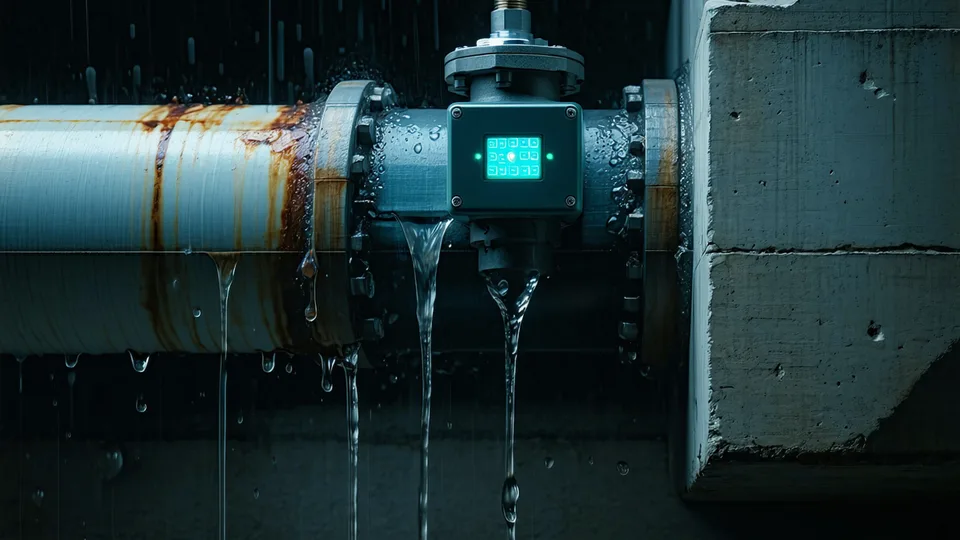
Five core water quality parameters, continuously measured
Watsynq's sensor integration layer reads directly from your installed inline sensors or connects to third-party sensor nodes via MODBUS, DNP3, or REST API.
Turbidity
Nephelometric Turbidity Units (NTU) monitored against EPA primary drinking water standards. Spike detection with temporal context — distinguishes construction disturbance from main break particulate.
pH
Continuous pH monitoring with ±0.05 resolution. Corrosion index calculation using Langelier Saturation Index helps predict pipe wall degradation in high-pH arid-climate groundwater environments.
Chlorine Residual
Free and total chlorine measured at distribution system pressure zones. Alert thresholds configurable per regulatory zone requirement. Disinfection byproduct formation potential flagging.
Conductivity
Electrical conductivity as a proxy for total dissolved solids. Sudden conductivity changes correlate with intrusion events, backflow contamination, or cross-connection incidents.
Temperature
Temperature stratification monitoring in large-diameter mains. Critical for arid-climate systems where shallow summer pipe temperatures accelerate biofilm growth and chlorine decay rates.
Pressure (Add-on)
Real-time pressure telemetry feeds both the Water Quality module and the Network Analytics risk model. Pressure transient signature detection available as a module add-on.
Configurable thresholds. Escalation paths built to your SOPs.
Define primary, secondary, and emergency thresholds per parameter per pressure zone. Watsynq's alert engine suppresses transient noise and confirms sustained exceedances before triggering escalation — reducing false pages by an average of 74% compared to raw threshold alerting.
- Three-tier escalation: Operator → Supervisor → Emergency Response
- Time-of-day and shift-aware routing (off-hours to on-call pager)
- AWWA Emergency Response Plan integration templates available
- SCADA pass-through: confirmed alerts can write-back alert codes to OSIsoft PI
"turbidity_alert": {
  "warn_ntu": 0.5,
  "critical_ntu": 1.0,
  "confirm_duration_s": 120,
  "escalation": [
    "[email protected]",
    "pagerduty:P7X3K2"
  ],
  "off_hours_route": "oncall_pager"
}Early detection of a distribution-level intrusion event
At 2:14 AM, a pressure transient in Pressure Zone 7B causes a brief low-pressure event at a service connection in an older neighborhood served by 1968-era cast iron mains.
Watsynq's WQ module detects a simultaneous turbidity rise (0.8 NTU, sustained 180 seconds) and conductivity step-change (+48 μS/cm) at sensor node WQ-047. The spatial correlation flags this as consistent with a backflow intrusion signature rather than a construction disturbance.
An escalation alert routes to the on-call distribution superintendent at 2:17 AM — three minutes after onset — with the sensor node location, magnitude, and a recommended isolation sequence.
Detection timeline
Water Quality Monitoring is included in the Pilot tier.
Up to 8 sensor nodes and full alerting included at $1,500/month. Start seeing your distribution network's water quality telemetry in 14 days.